


Practice the conversation before it happens
The sale you have to close. The review you have to deliver. The customer you have to calm down. With EasyCoach, your people rehearse all of it with an AI coach until they are ready.
Trusted by 75,000+ authors in 2,000+ companies
Knowing what to say is not the same as saying it under pressure
Most training builds knowledge. What it can't do is give someone a safe place to practice out loud before it counts.

Practice depends on who's free
When practice depends on a manager's schedule, some teams get plenty and others get almost none.

No caps on how often your team practices
Most people get their first attempt in front of a real customer or a real report, where mistakes are public and expensive.

Leaders find out too late
When success is measured by course completion, a skill gap only surfaces after it has already cost something.
From scenario to skill in four steps
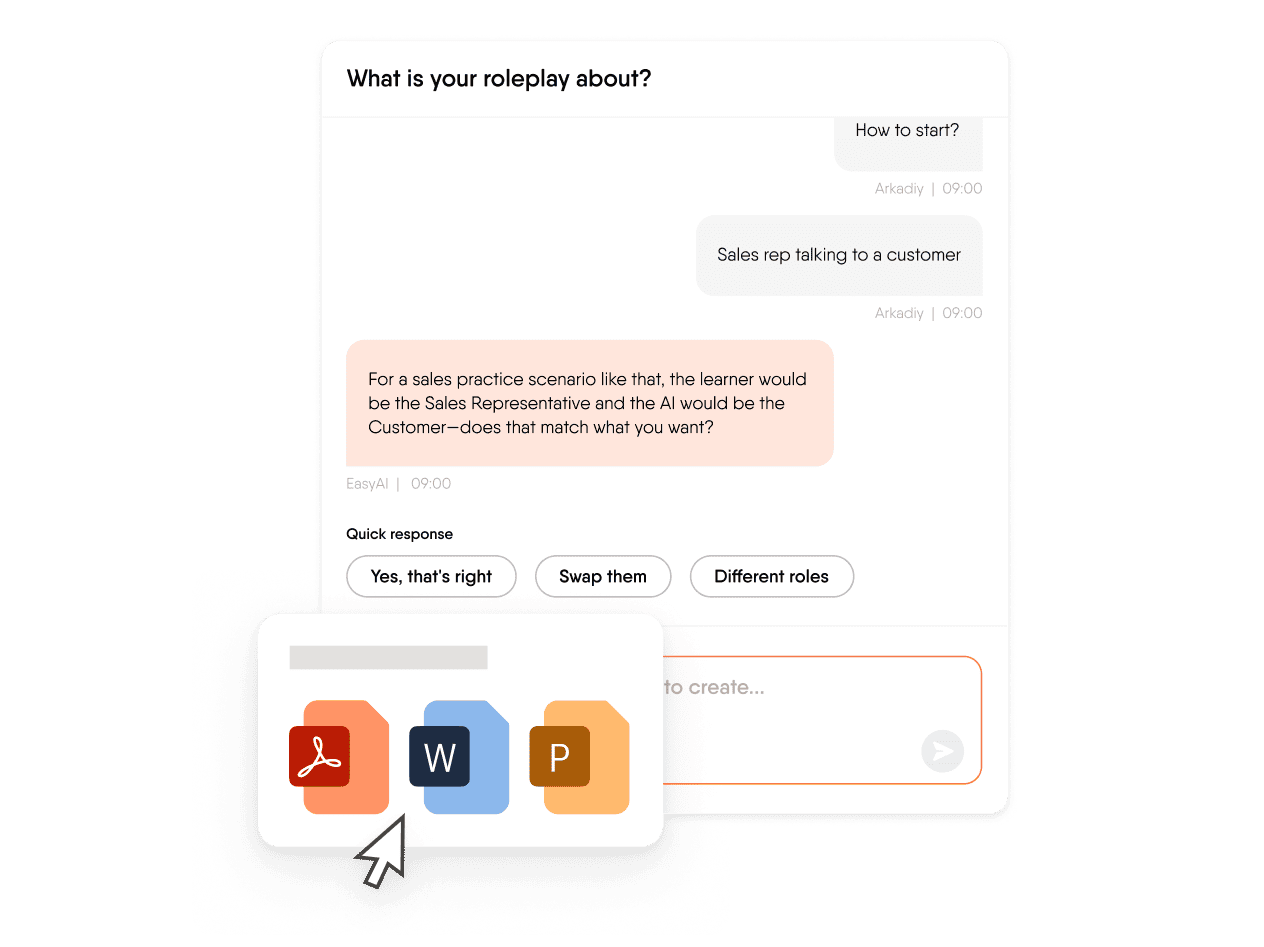
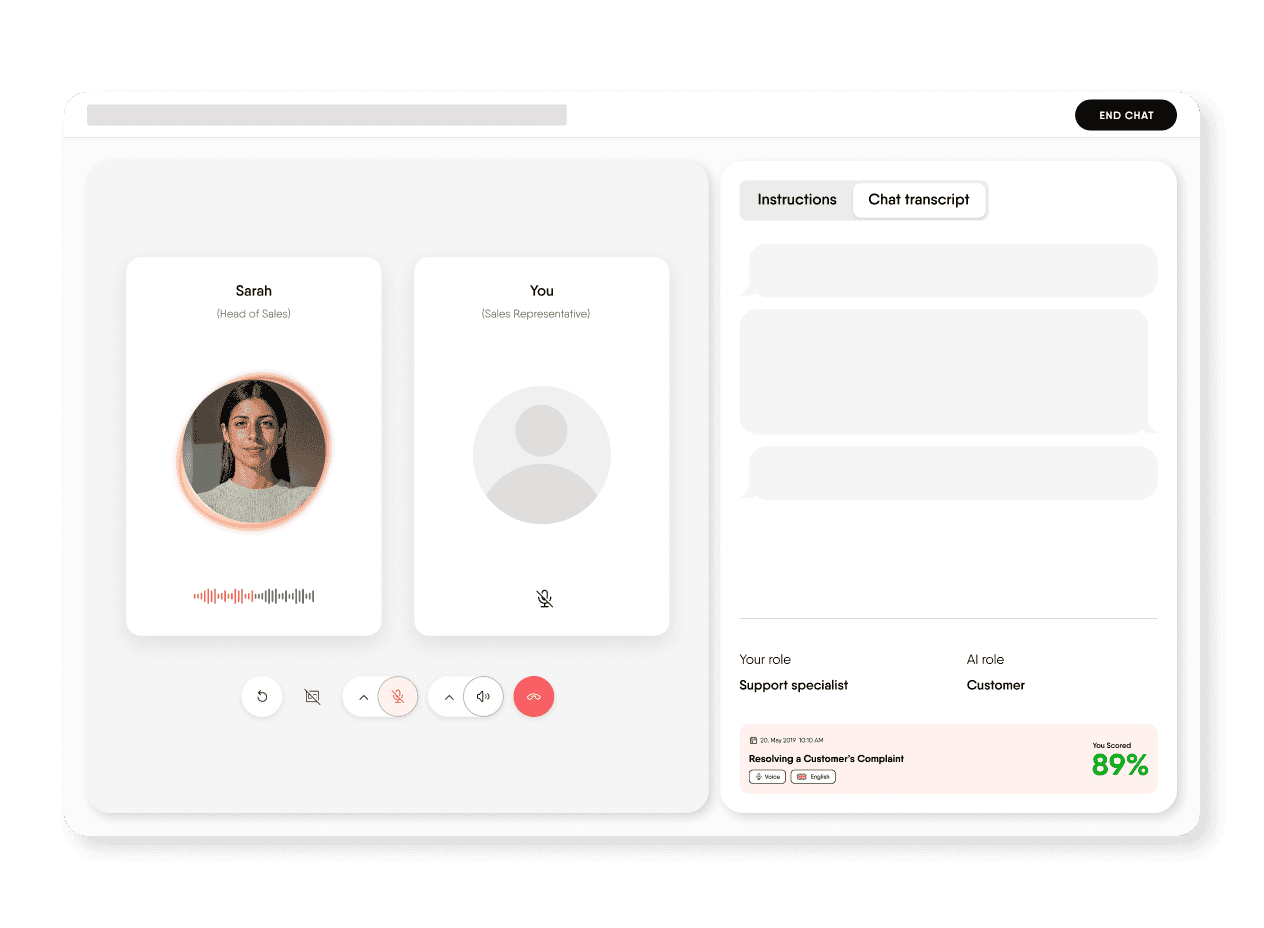
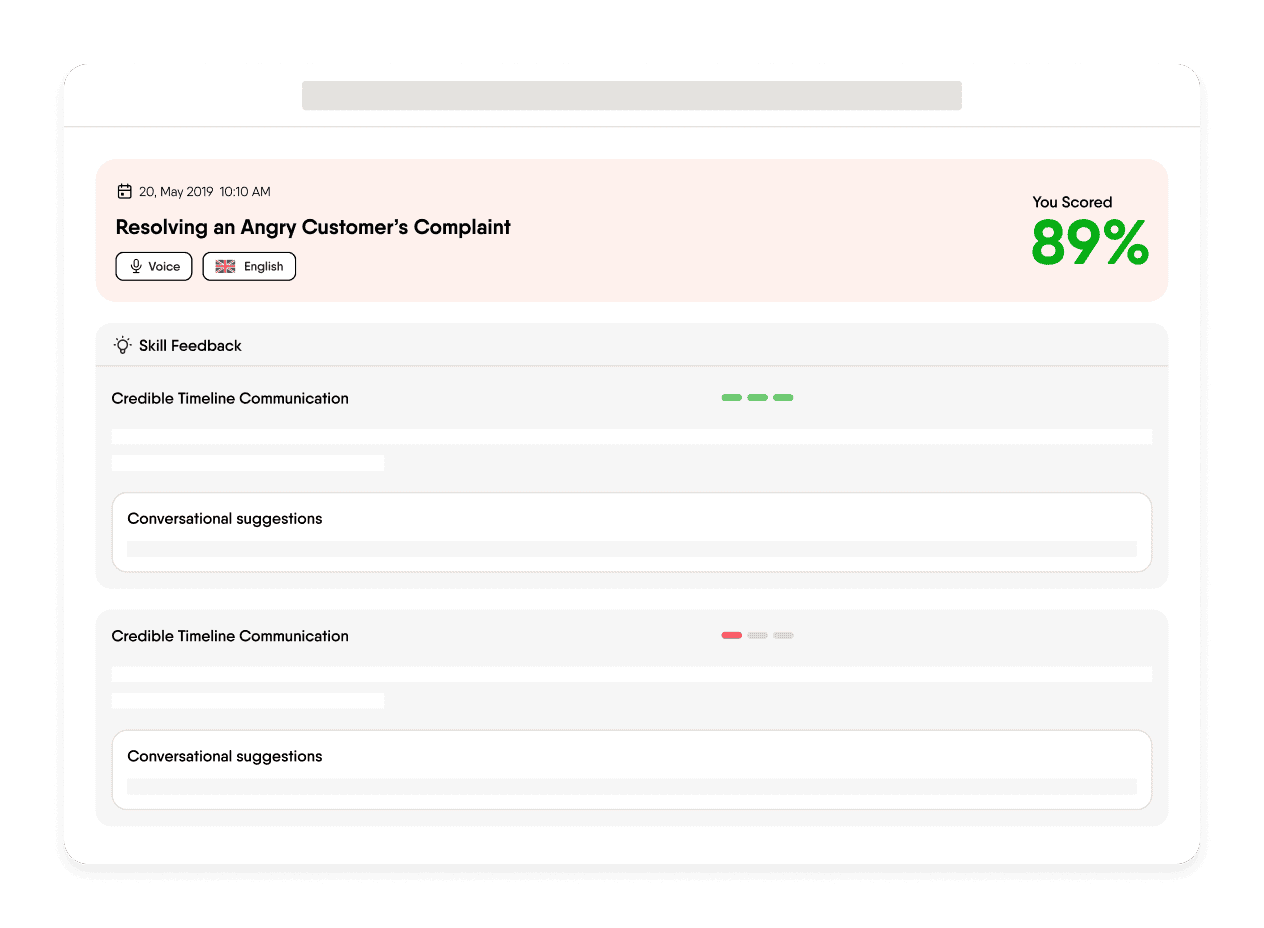
Set up the conversation once, and your team can practice it whenever they need, with feedback after every attempt
Built around how your organization works

Built from your own conversations
Every scenario comes from your team’s real context, documents, and standards, not a generic template.

Visibility your organization controls
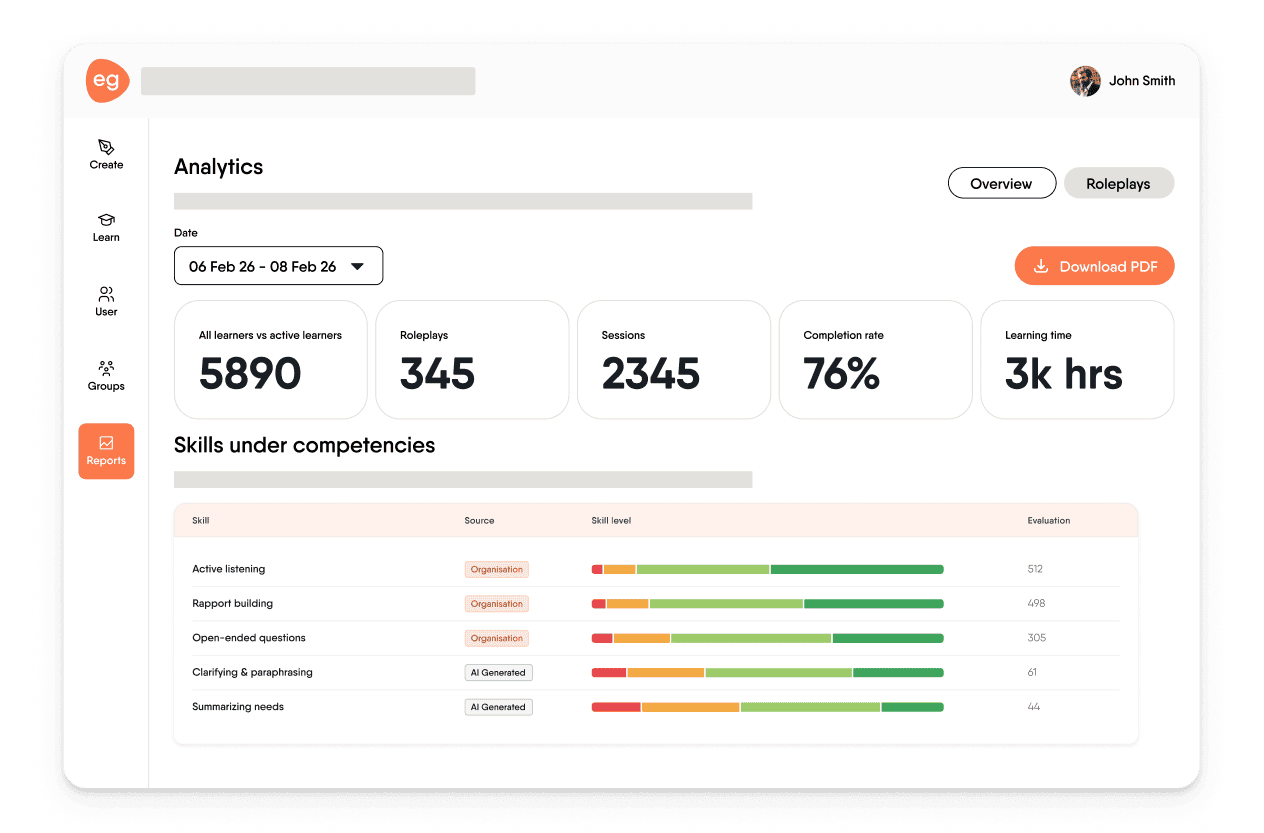
Some teams want managers to see every practice session in full. Others want people to fail safely first, with only an aggregate skill score ever surfacing.

Feedback measured against your standard
Your team defines what good looks like, and every session is measured against that.

Practice that doesn't run out
Learners retry the same scenario as many times as it takes. Nothing is capped and nothing runs out mid-quarter.
What changes when practice is always available
Learners return to the same scenario an average of 6 times before they are satisfied with how it went


Traditional coaching vs. EasyCoach
Traditional coaching
EasyCoach
Traditional coaching
It depends on who your manager is
Coaching reaches the employees who work directly with a manager or a coach. Everyone else waits for someone senior to have room in the week.
EasyCoach
It works whoever you report to
Employees build skills on their own, with an AI coach alongside them, so access does not depend on who they report to.
Traditional coaching
The session ends and so does the practice
Live one-to-one conversations guided by a manager or coach. They work well, but they end when the meeting ends.
EasyCoach
Practice happens as many times as needed
Realistic voice and text conversations with instant feedback after every attempt, saved so learners can see what changed since the last one.
Traditional coaching
Fewer conversations, more insight
Deep development, personalized to the learner. Nothing replaces a manager who knows their history and what they can handle.
EasyCoach
More conversations, more practice
Regular practice that builds confidence and reinforces the skill, so a manager's time goes to development instead of repetition.
Traditional coaching
Occasional by default
Coaching competes with everything else in a manager's week, so it happens occasionally, whenever schedules and availability allow.
EasyCoach
Whenever learners need it
People practice as often as they want. No booking, no waiting, and no limit on attempts.
Traditional coaching
Progress varies by who's judging
Progress is read from observation and experience, so two managers who watch the same conversation often reach different conclusions.
EasyCoach
Progress has the same criteria every time
Progress is tracked across repeated practice sessions, so improvement shows up for each person and across the team.
Every team has a conversation they can't afford to get wrong
Frequently asked questions
What is EasyCoach?
–
EasyCoach is an AI-powered roleplay practice tool from Easygenerator that lets employees rehearse real workplace conversations before they happen. Teams build a scenario from their own documents, practice it by voice or text, and get feedback after every attempt.
What is AI roleplay practice?
+
AI roleplay practice is a training method where a learner holds a realistic conversation with an AI character that plays the other person, then gets feedback on how it went. Traditional roleplay needs a facilitator, a scheduled session, and a willing colleague. EasyCoach removes all three, so a learner can practice a difficult review or a stalled sales call as often as they need.
Who is EasyCoach for?
+
EasyCoach is for L&D and HR teams who need employees to build skills which manager-led coaching cannot reach. The people practicing are usually in sales, support, leadership, or a new role. It suits organizations where coaching quality varies by manager, since everyone practices against the same scenarios and the same criteria.
What does a practice session in EasyCoach look like?
+
A practice session in EasyCoach starts when a learner opens an assigned scenario and chooses whether to speak or type. The AI plays the other person and responds the way they would, so it pushes back, hesitates, or changes the subject. When the conversation ends, EasyCoach scores it against the organization’s criteria and shows what to adjust. Learners can retry as many times as they want.
What languages does EasyCoach support?
+
EasyCoach supports roleplay conversations in more than 70 languages, including regional languages, with voice practice available in 40 of them. Learners can practice in a different language from the one the scenario was written in, and the feedback comes back in the language they used.
How is EasyCoach different from a course?
+
A course builds knowledge, and EasyCoach builds the ability to use it under pressure. A course explains what a good performance review sounds like. EasyCoach gives someone the chance to deliver one, see why it went wrong, and try again. The two work together.
How is EasyCoach different from ChatGPT?
+
EasyCoach is a structured practice system, while ChatGPT is a general-purpose assistant that can improvise a roleplay if you prompt it well. Scenarios in EasyCoach are built from your own documents, so the AI behaves like your customers rather than a generic version of them. Feedback is scored against criteria your team defines, so every learner is measured the same way. And every attempt is recorded, so managers can see where skills are improving.